Category: Money Laundering

How Dirty Money is now flowing through different channels

Illicit funds are now flowing through new channels in Latvia following a major crackdown and reforms, the Baltic country’s FIU chief has revealed. Despite strict measures imposed by the Latvian authorities to combat dirty money, it has emerged that the flow of these illicit funds still continues through new channels today. In an interview, Ilze Znotina, director of the Latvian Financial Intelligence Unit (FIU) said: “Where are these flows now? They are definitely continuing to circulate in Europe and of course the world,” he told Bloomberg. “We unfortunately have to start to think a lot more about different financial services,…


Vietnam needs measures to curtail financial crimes

Money laundering is becoming rampant in Vietnam, and if not curtailed, then money laundering criminals will soon find ways to legalize this money which then will find its way into reputable banks, or invested in projects in Vietnam. Mr. Thomas Hung Tran, a Forensic and Financial Crime expert, believes that laundered crime money is already circulating in society and used under cover of investors in our developing economy. In Vietnam, such activity can easily lie untraced. For instance, in one southwestern region, officials discovered a conspiracy to launder and legitimize almost US$ 200 million. The strategy of most emerging countries…

EU to Remove Ghana from Money Laundering Countries

European Union has announced plans to remove Ghana from the list of countries that are deficient anti-money laundering and terrorism financing. The decision to remove Ghana from the list followed a two-day working visit by the President of Ghana, Nana Addo Dankwa Akufo-Addo to Brussels, Belgium from the 19th to 20th May, 2021. A statement by the Acting Director of Communications, Office of the President of Ghana, Eugene Arhin said Akufo-Addo met with the President of the European Council Charles Michel where he intimated the EU with efforts of his government in implementing the action plan of the International Country…

Anti-money-laundering: Identifying and closing the remaining loopholes

The EU needs to take an ‘all-hands-on-deck’ approach to tackling money laundering, including the creation of an independent supervisory authority, argues Billy Kelleher. A quick scour through recent news sites is likely to produce several results of high-profile cases of money laundering with large-value seizures across the European Union. Money laundering is a crime that governments and authorities have been trying to tackle for centuries. The money both emanates from, and also funds, criminal activities. The crimes and the techniques for money laundering have evolved, but can range from the somewhat petty to – at their most serious – funding…

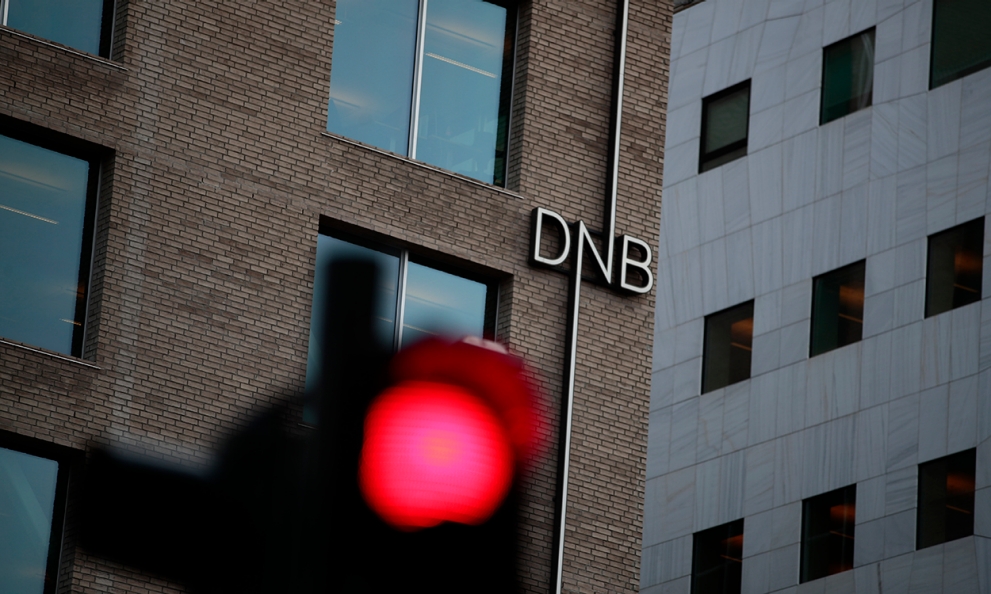
Norway’s DNB fined $48.1M for AML violations

DNB ASA, Norway’s largest financial services group, will pay a fine of NOK 400 million ($48.1 million) for failing to adhere to Norwegian Anti-Money Laundering Act standards. The Financial Supervisory Authority of Norway (Finanstilsynet) imposed the fine following an inspection of DNB’s anti-money laundering (AML) policies and procedures. Additionally, a separate investigation was conducted into its handling of customer accounts for Icelandic fisheries company Samherji. “The inspection revealed serious breaches in the bank’s compliance with the Anti-Money Laundering Act,” Finanstilsynet announced Monday in a press release. DNB announced last year the fine was imminent. The details: Finanstilsynet said it found…

Dubai gold trader fined Dh1.35m for failing to comply with anti-money laundering and terrorism financing laws

Unnamed company fined for a total of eight violations in Ministry of Economy inspection campaign A gold trader in Dubai has been fined a total of Dh1.35 million ($367,597) for eight separate breaches of laws governing money laundering and terrorism financing. The unnamed company was fined as part of the Ministry of Economy’s extensive inspection campaign into Designated Non-Financial Business and Professions (DNFBPs). DNFBPs are a group of non-financial businesses governed by money laundering rules, and include precious metals dealers, property brokers, auditors and corporate services providers that offer company formation services. “Three companies belonging to the group were issued…

How to Combat Money Laundering in Europe

Good luck finding a major bank in Europe that hasn’t breached money laundering regulations. In Denmark, the two largest banks, Danske Bank and Nordea, are both currently subject to criminal investigations. BNP Paribas received the highest-ever fine in 2014, when it settled with U.S. authorities and had to pay $9 billion for sanctions violations. Many others — from HSBC and Standard Chartered in the U.K. to Deutsche Bank and UBS and Credit Suisse — have had to answer for offenses. These cases show that living up to money laundering regulations is difficult, but not doing so is one of the…

Recent AML Enforcement Trends in the U.K.

IntroductionThe UK has stepped up its anti-money laundering (AML) enforcement approach in recent months, both issuing larger fines and looking to expand the scope of activities it regulates. Historically, the UK has consistently taken a robust approach to AML, and post-Brexit, we expect this trend to continue, as the government works with other regulators internationally in combating cross-border economic crime. BrexitPre-Brexit, the UK adopted the European Union’s extensive AML framework. However, as of 31 December 2020, the onus is now on the UK to ensure that it keeps up to date with the latest international AML regulations and developments. The…

The failure of ABN Amro and other systemic banks to control money laundering

Following several fines imposed by national regulatory authorities on banks such as ING and ABN Amro, the systemic banks started a KYC-race (Know Your Customer) to investigate “suspicious” transactions by looking into the history of account holders and shareholders of companies, the private expenses and possessions of shareholders and even the backgrounds of company’s clients. In this race, the banks have hired hundreds of controllers, who are equipped with a very menacing weapon, namely that of being able to block a company’s corporate bank account or even terminate the relationship. These controllers, often with little to no experience from the…

Terrorists still raise money through crypto but the impact is limited

Evidence suggests crypto’s role in terrorism remains relatively minor: “It has not yet become a primary means of terror financing.” We’re living today “amidst an explosion of risk related to fraud, money laundering, terrorist financing, and data privacy,” said United States Treasury Secretary Janet Yellen in February — and she specifically cited cryptocurrencies as a “tool to finance terrorism.” Yellen appeared to be flagging an important new turn in the war against terror, and it begged some questions: Is crypto in the hands of terrorists a real, present danger to governments and society? If so, should the cryptocurrency and blockchain…

U.K. money laundering enforcement – the political race to the bottom

The last three years have seen some seismic changes in both EU and UK anti-money laundering legislation along with related enforcement reporting initiatives. Updated Money Laundering Regulations were enacted in 2017. In early 2018, the Treasury set up a new body; the Office for Professional Body Anti-Money Laundering Supervision (OPBAS), to act as a ‘supervisor’ of AML supervisors with the responsibility for monitoring money laundering activity. 2018 also saw the first ‘Unexplained Wealth Order’ (UWO’s). The EU Parliament brought into force the sixth AML Directive with some stark changes to both penalties and reporting and data sharing policies. At first,…

London used as ‘money-laundering base’, mafia trial prosecutor says

In Italy’s largest mafia trial in three decades, the UK’s capital has been roped in as a potential hotspot for organised crime, particularly post-Brexit. The trial will see around 900 witnesses testify against more than 350 ’Ndrangheta defendants, including politicians and officials charged with being members of Italy’s most powerful criminal group. Defendants are set to respond to charges of money laundering through companies set up in the UK, with the alleged purpose of mimicking lawful economic activity. “’Ndrangheta interests in the UK have figured prominently as clans have used the country as an investment and money-laundering base,” the prosecutor…

Law profession has struggled with AML rules, says firm fined £10,000

A Surrey law firm has been fined £10,000 for breaches of the anti-money laundering rules in its training, approach to risk assessment and in a conveyancing transaction which produced £850 in fees. QualitySolicitors Brett Holt accepted the fine by reaching an agreement with the Solicitors Regulation Authority (SRA) but said that a “significant proportion” of law firms had “struggled to achieve compliance” with the 2017 Money Laundering Regulations. In the agreement, approved by the Solicitors Disciplinary Tribunal, Brett Holt accepted that in a property transaction in late 2017 it failed to undertake identity checks and retain copies of address verification…

Biden was tough on drugs for decades. Now he faces challenges in fighting money laundering

WASHINGTON — Decades ago, then-Sen. Joe Biden established himself as a sort of drug czar on Capitol Hill. In the 1980s, he helped launch the Office of National Drug Control Policy. And a decade later, Biden became one of the masterminds behind Plan Colombia, a $7.5 billion bilateral program focused on, among other things, fighting drug trafficking in the Americas. While running for president, he vowed to enforce “sanctions on international actors engaged in the trafficking of illicit drugs,” and Congress gave him a stronger anti-money laundering law that could help achieve that goal. But with the emergence of new…

FCA has increased surveillance over last 12 months

The Financial Conduct Authority (FCA) has highlighted the importance of anti-money laundering (AML) and said that it has increased its surveillance. Two of its biggest sanctions in the last 12 months related to failures to address financial crime and AML risks. Speaking at the AML & ABC Forum 2021, Mark Steward, executive director of enforcement and market oversight at the FCA, said that the City regulator currently has 42 AML investigations ongoing – 25 into firms and 17 against individuals. These involve, for example, systems and controls over politically exposed persons, customers with significant cash-intensive operations, correspondent banking and trade…

What Is a Company Formation Agent?

Put simply, a formation agent is a company that creates other companies on behalf of clients around the world. The process is quick, easy, and remarkably cheap. Although many turn to formation agents for legitimate business reasons, illicit actors might seek out their services to dodge taxes, hide their ownership of high-value assets, or squirrel away dirty money. It’s no coincidence that these firms are exceptionally popular in tax havens and financial secrecy jurisdictions. Even a cursory internet search turns up an abundance of eager firms in Belize, Panama, Luxembourg, Liechtenstein, Cyprus, Seychelles, Malta, the Cayman Islands, and the British…

Ireland to enforce AML checks for digital currency firms from April in line with 5AMLD

Ireland will impose anti-money laundering (AML) and countering the financing of terrorism (CFT) requirements for digital currency firms starting April 2021. With the new regulations, the Irish central bank will have more oversight over the industry. Buyers and sellers of digital currencies will no longer be able to transact anonymously, local daily Irish Independent reports. Digital currency firms, also known as virtual asset service providers (VASPs), will now have to complete due diligence on their clients. This is after the European nation adopted the EU’s Fifth Anti Money Laundering Directive (5AMLD). 5AMLD is the EU’s latest legal framework for combating…

Cyprus to lift veil of secrecy with register of company owners

NICOSIA (Reuters) – Cyprus plans to launch a register in coming months identifying the owners of thousands of companies on the island, lifting a veil of secrecy on opaque and complex corporate structures that campaigners say can help criminals seeking to hide their loot. Details of thousands of companies domiciled on the island, many thought to have Russian links, will be collected from March 16 to be entered in a so-called Ultimate Beneficial Owner (UBO) register. Supporters say the register, a requirement of European Union anti-money laundering (AML) regulations, could be a game changer for Cyprus, which activists say has…

Moscow Court Sentences Banker in ‘Russian Laundromat’ Case

A court in Russia sentenced banker Oleg Kuzmin on Monday to nine years in prison and ordered him to pay a one-million-ruble (US$13,574) fine for his part in a major money-laundering operation known as the “Russian Laundromat” or the “Moldovan Scheme,” Kommersant reported. The operation that lasted from 2010 until 2014 may have been the largest of this kind in Eastern Europe, with more than US$20 billion of illicit money transferred from Russia to Moldova and Latvia through a complex series of intermediaries, a 2014 OCCRP investigation revealed. Implicated in it were not just members of organized crime groups, but…

FATF chief suggests criminals are ‘getting away with’ lucrative profits because AML industry doesn’t use its collective power

FINANCIAL CRIMINALS ARE getting away with the bulk of their profits, even though the FinCrime industry collectively has the power to stop it, the head of the Financial Action Task Force has said. President Dr Marcus Pleyer criticised the gap between theory and reality when it comes to AML, saying that this was a reason why so many criminals continued to succeed in the financial system. Banks, accountants, company formation agents, lawyers and others were all part of this problem, he said in a keynote address to the AMLintelligence Global Action on Money Laundering conference Thursday. “All of them need…

HMRC Anti-Money Laundering Supervision annual assessment

1) Summary1.1 Certain types of legitimate business services can be attractive to criminals, who exploit them to launder money or finance terrorism. Life is made easier for criminals when insufficient controls are in place. It is therefore essential that businesses put in place adequate measures to prevent criminals from using their services to launder money and finance terrorism. 1.2 HMRC is one of 25 Anti-Money Laundering (AML) supervisors in the UK. HMRC delivers its supervisory responsibility through its Anti-Money Laundering Supervisory (AMLS) teams. HMRC helps ensure that businesses comply with the current Money Laundering, Terrorist Financing and Transfer of Funds…

UK Art Dealers Are Misusing the Law to Avoid New Money-Laundering Regulations. Compliance Experts Say It Will Backfire

Art businesses should not be fooled into thinking they can use “reliance” as a loophole, experts say. The UK’s art market has been subject to stringent new regulations since an anti-money laundering directive came into force in January 2020. While the new requirements to conduct identity checks and other due diligence on art buyers initially came as a shock to an industry that has for centuries operated on handshakes, much of the market is now accustomed to these processes. But experts say that some art businesses may have misunderstood a key part of the regulations, and could be unwittingly breaking…

EBA publishes guidelines on money laundering and terrorist financing risk factors

The EBA has published its final revised Guidelines on money laundering and terrorist financing risk factors.The revisions consider changes to the EU Anti Money Laundering and Counter Terrorism Financing (AML/CFT) legal framework and address new ML/TF risks, including those identified by the EBA’s implementation reviews. In addition to strengthening financial institutions’ risk-based approaches to AML/CFT, the revision supports the development of more effective and consistent supervisory approaches where evidence suggested that divergent approaches continue to exist. The Guidelines are central to the EBA’s work to lead, coordinate, and monitor the fight against money laundering and terrorist financing. The Guidelines are…

Money launderers ‘prey on generation Covid’

Criminals are seizing on young people’s Covid-related financial troubles to hire them to unwittingly launder money, experts say. More than four in 10 cases of money mules involved victims aged 21 to 30, with the numbers rising last year, fraud prevention service Cifas said. Banks said criminals posted fake job adverts on social media, targeting “generation Covid” struggling for work. It is part of a wider trend of fraudsters exploiting the crisis. ‘Fake job adverts’ Criminals want to move money through accounts to make it look less suspicious to banks. Money mules are given a cut for allowing their account…

AFME calls for regulatory certainty on the treatment of crypto assets

The Association for Financial Markets in Europe (AFME) has called for UK authorities to provide regulatory certainty on the treatment of crypto assets in its response to HM Treasury’s consultation on the UK approach to crypto assets and stable coins. AFME has also pushed for a review of existing financial services legislation to identify and address obstacles to distributed ledger technology (DLT) innovation. The association has recommended a more “granular crypto-asset taxonomy” to clarify the treatment of existing use cases that will support the UK approach to fulfil regulatory objectives and encourage innovation. This will support greater certainty on which…

ING acknowledges decision by French financial regulator

ING has acknowledged the decision published today by the financial regulator in France, the Autorité de contrôle prudentiel et de résolution (ACPR), on ING in France, following its inspection in 2018, for shortcomings in its anti-money laundering (AML) and anti-terrorist financing framework. Based on the ACPR findings, ING in France has put in place all the necessary corrective measures to strengthen its processes and management of compliance risks. Based on the inspection, the ACPR has reprimanded ING in France and imposed a sanction of €3 million. In the context of significantly increased attention on the prevention of financial economic crime…

Albanian Government Made No Significant Progress Against Money Laundering and Financial Crime in 2020

Albania is a source country of cannabis and a home base for organized crime groups moving narcotics from source countries into European markets. Albanian nationals are heavily involved in trafficking illicit narcotics throughout Europe but the government needs to do more, according to a new US State Department report. The International Narcotics Control Strategy Report provides a country-by-country analysis of crime including drug trafficking, money laundering, and the government’s response. It found that Albanian cannabis is sent to Turkey and exchanged for heroin and cocaine which is then smuggled across Europe by Albanian nationals. Furthermore, the illicit profits of these…

The Challenges of Combating Money Laundering in a Pandemic World

By Adriana Babi – Compliance Researcher and member of OAB Compliance Commission In a pandemic scenario full of uncertainties, efforts are directed towards the pursuit of normality, and what we know is that for some time to come, we will live this “new normal”, but how to conceptualize the current reality in the perspective of combating Money Laundering and Financing of Terrorism (LD / FT)? In general terms, money laundering consists of transforming resources obtained illegally into lawful resources. In Brazil, the crime of money laundering is regulated by Law 9,613, of March 1998, whereas terrorism consists of the practice…

Implications of the Anti-Money Laundering Act (2020) for FinTechs

By Jeff Horvath, Co-Founder and CEO, DigiPli The Anti-Money Laundering Act of 2020 (AMLA 2020) became law in early January, with major implications across institutional finance, including FinTechs. It introduced the biggest changes to the AML regime since the PATRIOT ACT of 2001 and was passed with strong bipartisan support. The Act remediates certain weaknesses in existing AML requirements, addresses new issues arising from advances in the financial markets and technology, and enhances regulatory coordination. FinTechs with US operations should closely analyze AMLA 2020, as it will require both changes to their AML programs and controls, and impact how they…

Capital One: What its US$390m fine tells us about AML Regulation

The Financial Crimes Enforcement Network, or FinCEN, announced in January 2021 that Capital One would be required to pay a hefty $390 million penalty for AML violations under the Bank Secrecy Act (BSA). The bank admitted to wilfully failing to implement and maintain effective AML procedures to guard against money laundering, also failing to file thousands of Suspicious Activity Reports (SARs) and Currency Transactions Reports (CTRs) with respect to its Cash Checking Group business unit. The violations occurred from (at least) 2008 – 2014, seeing millions of dollars in suspicious transactions go unreported and therefore laundered through the bank into…

Anti-money laundering rules to fight the culture of secrecy

The new rules state that art and antique dealers in the United Kingdom and the European Union now have to notify the true recipients of their sales. Will the new anti-money laundering regulations improve the culture of secrecy deeply rooted in the art market? In society, it advocates ancient customs of commodity and body discretion that foster transactions. Collectors have long appreciated the secret wealthy, which is also part of the mysterious universe of auction houses. When a Botticelli bottle was auctioned last month for $ 92 million at Sotheby’s in New York, it was speculated that the buyer was…

Crown Resorts chief Ken Barton resigns amid money laundering scandal

The chief executive of Australian casino group Crown Resorts has quit amid a scandal over money laundering allegations within its casinos. Ken Barton’s departure follows that of several other company directors. Last week an inquiry found Crown was not fit to hold a gaming licence in New South Wales, meaning it cannot operate its newly built casino in Sydney. The report has also thrown doubt over Crown’s casinos in other cities. Crown, which is majority-owned by Australian billionaire James Packer, has been dogged by allegations of illegal activity for years at its casinos in Melbourne and Perth. Its operations overseas…

New U.S. Financial Crimes rules intensify risks for non U.S. banks

Fitch Ratings-Stockholm/London/New York-24 February 2021: Significant revisions to US anti money-laundering (AML) rules intensify financial crime risks for non-US banks by increasing the scope of potential investigations by the US government and raising financial penalties, according to Fitch Ratings. Any weaknesses in governance could be ratings relevant but increased enforcement raises the potential for sanctions and fines that can have more meaningful consequences for ratings. Lower tolerance of governance failures from a wide range of stakeholders reinforces Fitch’s view that governance and financial crimes risks, along with associated penalties and indirect business costs, are becoming more punitive for banks globally.…

Jersey firms fined for breaching financial crime measures

Three banking firms have been fined more than £700,000 for breaching anti-money laundering regulations. A Jersey Financial Services Commission (JFSC) investigation found the SGKH entities had failed to show “adequate risk management systems in place”. It included missing minutes from board meetings and a failure to notify the JFSC when rules were breached. The commission said it intended the fines to act as “a deterrent for all regulated businesses”. SGKH Bank, SGKH Trust and SGKH Corporate provide wealth management services from Jersey and form a sub-group of the UK regulated SG Kleinwort Hambros Bank. Between 1 January 2018 and May…

Europe’s new AML rules will include provisions to report on crypto-to-crypto transactions for the first time

EUROPE’S new AML rules will include far closer scrutiny of crypto exchanges, we can reveal. Right now exchanges must only report currency to crypto transactions. Under new rules to be announced within weeks, the exchanges will also be obliged to report on crypto to crypto transactions, AML Intelligence has learned. The changes will be part of the European Commission’s announcement of the rollout its AML Action Plan. The move to demand reports of crypto to crypto transfers was welcomed today by Pawel Kuskowski CEO of crypto AML/KYC compliance company, Coinfirm. “I think this is critical to have crypto to crypto…

Universities are leaving themselves open to money laundering by accepting cash

It is a sign of how narrowly we perceive the threat posed by money laundering that the problem is too often framed around taxi companies, car washes, and less than reputable property developers. But in reality, the conduits for this global scourge are increasingly complex, and we should not pretend that our lauded education system is somehow immune. A startling investigation by the Times newspaper found that at least 49 universities across the UK have accepted more £50 million in cash payments over the past five years for tuition, accommodation, and other course fees. Those who received the banknote payments…

Dubai’s DFSA fines former DIFC employee US$165,000

The Dubai Financial Services Authority (DFSA) has levied a fine of $165,000 against Ashish Bhandari – a former relationship manager with a private bank in Dubai International Financial Centre (DIFC) – due to his involvement in breaches of anti-money laundering regulations. The authority has also restricted him from performing any function in connection with the provision of financial services in or from the DIFC. On September 17, 2020, the DFSA decided to take enforcement action against Bhandari for being knowingly involved in breaches of Anti-Money Laundering (AML) legislation from 2011 to 2013 and for obstructing the DFSA in 2017 and…

Four nations including Morocco and Cayman Islands added to FATF ‘grey list’

Four nations have been added to the Financial Action Task Force ‘grey list’ following an extensive 3-day virtual summit. The first FATF plenary of 2021 wrapped up Thursday with the announcement that the Cayman Islands, Morocco, Burkina Faso and Senegal were now on the ‘list of jurisdictions under increased monitoring’ – joining fifteen other territories already there. While by no means a ‘do-not-approach’ list, it does highlight jurisdictions that have identified gaps in their AML frameworks and committed to working with FATF to resolve them. All four countries will now be subject to periodic assessment going forward as they work…

Malaysia’s AmBank agrees to $700m settlement for role in 1MDB scandal

Malaysian banking group AMMB Holdings Berhad (AmBank) said on Friday it will pay the government 2.83 billion ringgit ($699 million) to settle claims linked to a massive financial scandal at state fund 1MDB, a hefty payment that is expected to have a material impact on the group’s earnings. AmBank Group has been under scrutiny over its role in the alleged theft of $4.5 billion from 1Malaysia Development Berhad, a state fund former prime minister Najib Razak set up in 2009. Last year, Najib was found guilty of corruption and money laundering over the transfer of millions of dollars linked to…

FinCEN Announces $390,000,000 Enforcement Action Against Capital One

FinCEN Announces $390,000,000 Enforcement Action Against Capital One, National Association for Violations of the Bank Secrecy Act WASHINGTON—The Financial Crimes Enforcement Network (FinCEN) today announced that Capital One, National Association (Capital One) has been assessed a $390,000,000 civil money penalty for engaging in both wilful and negligent violations of the Bank Secrecy Act (BSA) and its implementing regulations. Specifically, FinCEN determined and Capital One admitted to wilfully failing to implement and maintain an effective Anti-Money Laundering (AML) program to guard against money laundering. Capital One also admitted that it wilfully failed to file thousands of suspicious activity reports (SARs), and…